How many people can you think of off the top of your head who are not connected via social media? Put the other way round: hardly anyone remains completely untouched by the influence of social media. No wonder that many small and medium-sized businesses worldwide already use a social media account.
Contents
Social media offers businesses many advantages and opportunities. These include:
- Communication on an equal footing
- High reach and target-group density
- Close customer loyalty
- Better Google rankings
- New sales channels
Communication on an equal footing
A big advantage of social media over other marketing measures is the relaxed atmosphere. You reach your target group not in their role as buyer, quality manager or contact person, but as private individuals. In this respect, the marketing channel resembles the classic mass medium of television – you could even argue that social media is gradually replacing television (and cinema) as the medium with the largest audience reach. Because people use social media in their free time, are in a relaxed and positive frame of mind, and are therefore more receptive to advertising.
The ideal place to get your message across to your target group so that it is really noticed – unlike the busy office atmosphere between deadlines and to-do lists, where your sales presentation somehow has to be squeezed in.
Good social media marketing with a targeted strategy takes aspects like this into account. Defining suitable goals and content is part of it too.
High reach and target-group density
Social media now reaches a large share of the world’s population – and of all internet users.
So the chances are pretty high that your target group is active on social media. And we are not just talking about B2C brands – most people have realised by now that you can sell products to end consumers via social media.
Even if you offer B2B services, you can find your target group on social media. Because every business contact is also (for at least half of their life) a human being and a private individual. If the buyer or decision-maker happens to come into contact with your company in their free time, they are more likely to remember you when your services become relevant to their company.
Of course, this requires a suitable social media strategy and possibly a social media manager. But the modern agency landscape is well equipped for this – for example Pathfinder Studios, a media service provider specialising in film, which, among other things, designs and manages social media presences for very large and very small clients in every industry.
Close customer loyalty
The basic idea of good sales – “solving my customer’s problem” instead of “telling the customer how good my product is” – is far more pronounced on social media: a good social media strategy meets customers where they are and deals exclusively with their world, their feelings and their needs. The company as the sender takes a back seat and builds a subtle, deep-rooted relationship. And in the long run, that can pay off more than short-term selling.
Better Google rankings
Your website also benefits from a well-maintained and regularly updated social media account. Google wants to show the most relevant search results, and a social media account with the same name is a kind of “social proof” – evidence that the company really exists and is active in the market. Blogs can do this too.
New sales channels
We mentioned above that B2C brands and online shops in particular can gain not only a marketing channel on social media, but an active sales channel. But as a media service provider, we are seeing more and more often that B2B clients, too, open up additional sales channels via social media. One service provider, for example, sells tutorials and eBooks through it, an industrial supplier sells assembly videos, and a third has built a complete online shop.
Many roads lead to more sales. A good social media agency will certainly help you along the way!
“Social media” refers to internet platforms on which people can interact with each other and exchange ideas on a personal level. The best-known (and most popular) channels are Facebook, YouTube, Instagram, Snapchat and TikTok, where both companies and private users are active.
The career platforms Xing, LinkedIn and Kununu are also social networks, although the focus here is more on working life than leisure, and the atmosphere is correspondingly more businesslike.
A brief overview of the most important networks:
- The most important: Facebook, Instagram, TikTok, X (formerly Twitter), YouTube
- Social business networks: Xing, LinkedIn
- Others: Snapchat, Pinterest, Vimeo, WhatsApp, Reddit
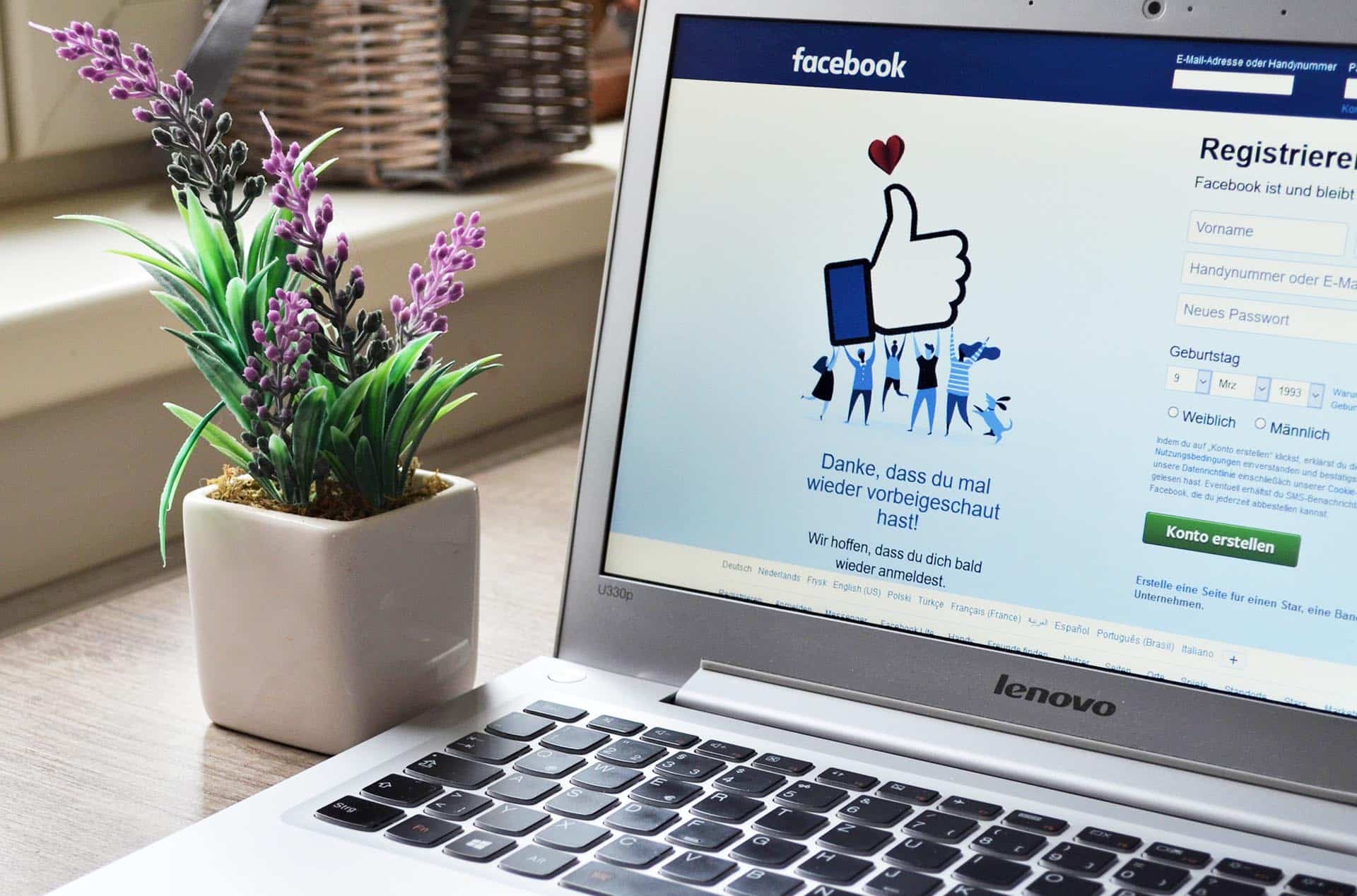
The undisputed top dog in our part of the world is Facebook, with a huge user base, a large share of whom are online every day, and a great many companies already active on the platform.
At the time of writing, Facebook offered good value for money for a broad cross-section of companies, because its precise audience targeting makes it possible to reach even complicated target groups and market unusual products. Its posting options also offer a good mix of text and AV media (images/videos).
Content can be published both organically (free reach) and as paid content (adverts).
Thanks to its variety, Facebook is an ideal entry point into social media for most companies.
Many companies already see Instagram as more important for their video marketing than Facebook. The platform specialises in AV media (images & short videos) and thus takes the modern, visual route. The network has a very large, active user base, in Germany too.
To be successful on Instagram in the long term, high-quality photos and videos are a must. This makes it more of an “advanced” medium, best handled in cooperation with a professional photographer / film production company.
Instagram is suitable for B2C companies or topics with a strong visual element. We recommend working with professional AV producers.
X (formerly Twitter)
If Instagram is the creative artist among social networks, X (formerly Twitter) is the intellectual journalist. Originally launched as a short-message service, it tends to be shorter, more topical and faster-moving than Facebook or Instagram.
Twitter started out as a short-message service, so content should get straight to the point and, where appropriate, link to external content.
X (formerly Twitter) is suitable for specialised, technology-driven and topical companies, and as a mouthpiece to the press.
YouTube
YouTube, a subsidiary of Google, is often called the second-largest search engine in the world – and it is also one of the largest social networks.
With YouTube marketing, companies can create a strong brand presence while also improving their own website’s ranking on Google.
YouTube is also well worth it as an advertising platform for paid clips before or between the videos of other channels relevant to your target group.
TikTok
TikTok is one of the youngest of the big social networks.
Even so, within just a few years of its launch, TikTok became one of the fastest-growing social networks in the world.
At the time of writing, the advantage some companies saw was that not many companies were active on the network yet, so competition was relatively low. How long that would last was uncertain.
At the time of writing, its users were mainly teenagers and young people, so TikTok marketing doesn’t make sense for every company.
Business networks and others
Social media is a conglomerate of several dozen channels whose importance, target groups and usage are constantly changing. Keeping up to date here is a daily challenge even for digital natives and social media consultants like us.
For the sake of clarity, we have only presented the channels most relevant to most companies here. However, in a detailed needs and competitor analysis (“benchmark”), we are very happy to work out with you which social media channel(s) suit you.
Together, we look at questions such as these:
Checklist: which social media channel suits us?
The following questions can help you decide:
- Which target group do I want to reach?
- How does my target group behave, and how old is it?
- Can we create high-quality audio/video content (or have it created)?
- Do we want to convey information or emotions?
You have come to the conclusion that social media can make sense for your company? Great! That leaves the question: handle it in-house, e.g. in the marketing or press department? Or work with an external service provider?
Here we try to give you a little help with the decision. Of course, you can also contact us personally at any time, with no obligation.
We often think that if we know something well, we can also do it well ourselves. After all, we use social media ourselves, and as marketers we are not entirely clumsy when it comes to copywriting and addressing target groups. Right?
Yes and no. Yes, because companies can of course handle social media in-house – if they follow a few rules. But also no, because social media may look like friendly togetherness and an “anything goes” mentality, but in reality even the smallest slip can lead to disaster: the notorious shitstorm.
Our recommendation: before you throw yourself into the fray, at least have professionals develop the strategy and measures. Ideally, also give the experts access to the account and let them do the work – at least in the initial phase. You can still decide afterwards whether to try it yourself from then on or leave it in the hands of the professionals.
Our tip:
Social media is the world of multimedia. Money you invest in good photos and videos can not only be used twice over, it also gives your presence a real boost.
Agency support is usually based on a prior concept, which in turn is based on an analysis. After all, your measures have to fit both your company or brand image and the rest of your marketing and communication strategy. This is also where goals and basic strategies are defined, which are important for later controlling.
Based on this concept, the agency designs suitable measures and, ideally, an editorial plan that becomes the shared basis for your work together.
Our tip:
Some agencies use shared account management so that you can still publish or prepare posts yourself. So you don’t have to hand over control completely.
The best thing to do is contact a social media agency you trust and work out together how you want to approach your entry into social media. We would be delighted if you also consider Pathfinder Studios for this: our social media managers have many years of experience in media and consulting, which makes them “digital natives” with professional experience. We have already supported numerous organisations – from tech start-ups and the public sector to corporations in every industry – with their social media, and have worked closely with our clients for years.
Here is one last checklist for you. We look forward to hearing from you!
Checklist: can we cover social media in-house?
The following questions can help you decide:
- Are we aware of the difference between classic PR and social media?
- Are our employees fit for social media not only privately but also professionally?
- How much time do we want to and can we devote to social media?
- Can we provide regular, high-quality social media management?
- Can we create competitive content?
You might also be interested in:
- Inbound marketing – what it is and how it works
- 10 video marketing tips that make your corporate film even better
- YouTube marketing – building a strong brand with online videos
- Instagram marketing – 16 tips that give you more reach straight away
- Winning customers – 10 tips for marketing and acquisition