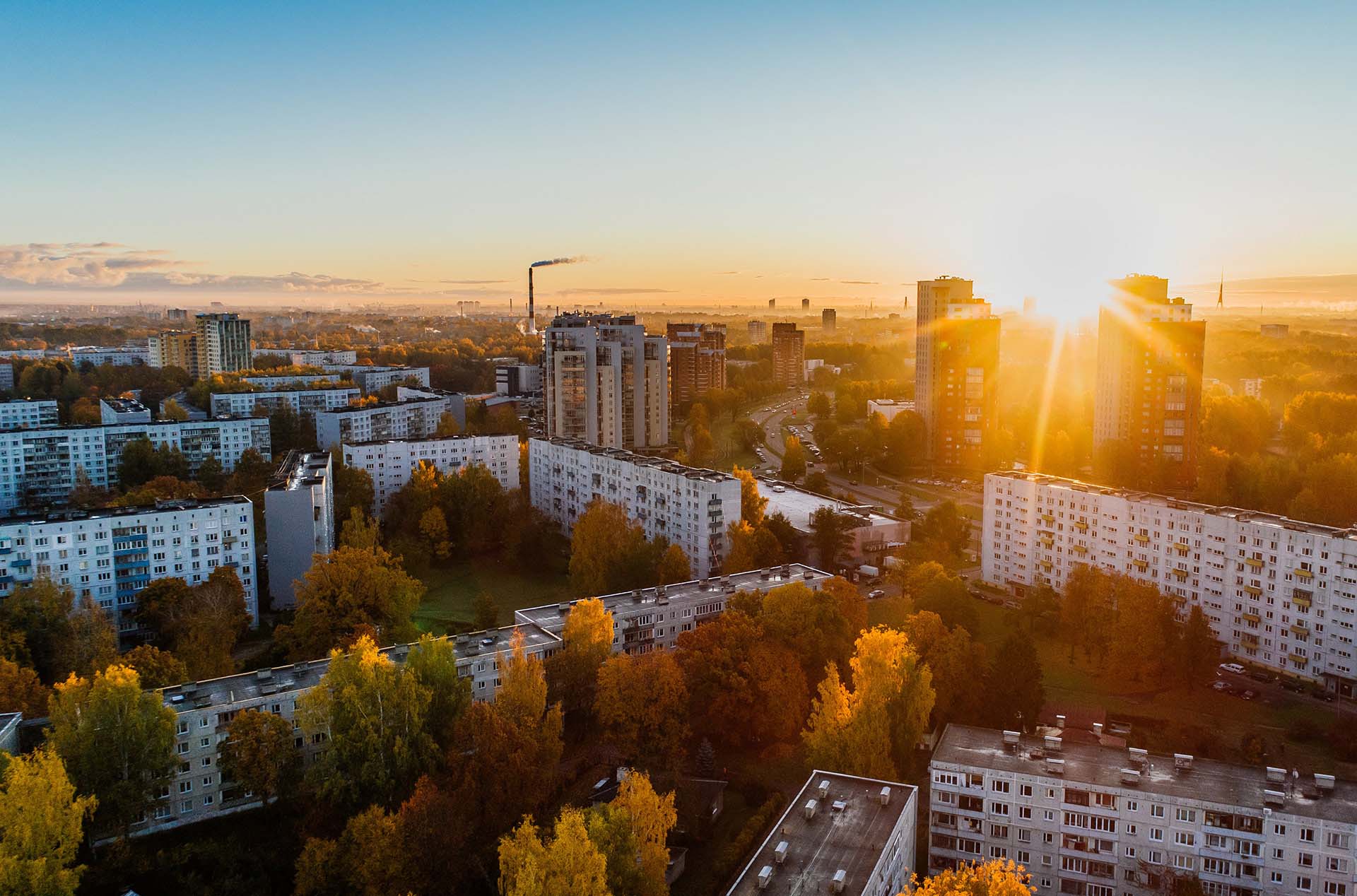
What makes aerial footage shot with drones professional? Professional aerial photos and moving images (“drone footage”) have been one of the big corporate film trends in recent years. But there is hardly another field with so many private operators working in a legal grey area. At the same time, this is exactly where you have to observe countless legal rules, permits and cost traps.
Contents
- What is professional aerial footage?
- What kinds of aerial footage are there?
- What is professional aerial footage suitable for?
- Where drone flights are restricted
- Different take-off weights and crew sizes
- Comparison: private pilots vs. film production companies
- Conclusion: what is professional aerial footage?
What is professional aerial footage?
Today you can buy a camera-ready multicopter (“drone”) for the price of a good smartphone or laptop. As a result, there are a great many private drone owners.
However, because multicopters (“drones”) are UAVs (unmanned aerial vehicles), they are subject to aviation law. Drone flights are strictly regulated – a professional drone operator takes care of registration and permits. This matters to you as a company because, as the client, you will want the best possible protection against any legal consequences.
Professional aerial footage is often part of a film such as a corporate film, industrial film or event video. It shows the size of company buildings or an event from the air and gives the film dynamic images from unique perspectives.
In this article we therefore deal exclusively with professional aerial footage, i.e. footage shot by people (yes, multicopter operators are also called pilots) who:
- have registered a business
- know the legal requirements for UAVs
- comply with the applicable aviation rules
- have extensive experience flying multicopters
- hold the drone pilot certificates required for their flights
- have aviation liability insurance
- can obtain any permits required
What kinds of aerial footage are there?
The air offers extraordinary perspectives. Besides shots of nature and cities, companies can also be shown impressively from above. Photos can be taken for your own website, for print or for social media.
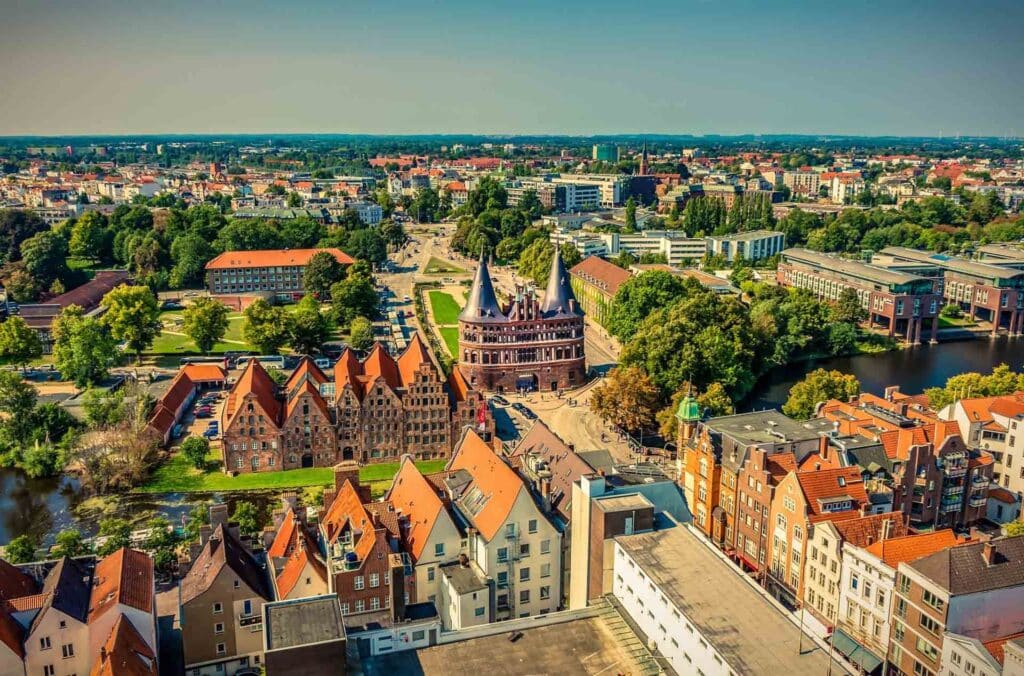
And of course videos like the following look impressive from the air:

Thanks to their steady flight behaviour (as long as the wind is not too strong), drones can also capture impressive time-lapse footage – such as city skylines at night or clouds drifting over a beautiful landscape.
What is professional aerial footage suitable for?
Drone aerial footage can be used in many ways and has been one of the most popular marketing tools for several years. An overview:
- Stills (photos) or moving images (videos)
- Time-lapse
- Popular subjects:
- Cities
- Landscapes (nature)
- Vehicles and traffic
- Company sites with large grounds
- Indoor flights through industrial halls
- Popular uses:
- on your own website
- in print products
- as large-format prints
- As part of a corporate film
You can find all the different film types for which aerial footage is a strong addition in our free eBook on video marketing (in German). It not only contains definitions of each film type but also gives use cases and concepts from successful projects, with strategies for successful marketing.
Aerial footage at events
If you want aerial footage at events, it is particularly advisable to hire a professional film production company for the drone flight. After all, there will be a lot of people on the ground, and you should only let a pilot fly who knows exactly about air turbulence, the danger from birds etc. and knows how to react in such situations.
At events – especially large events, festivals and football matches – pilots also have to comply with very strict rules. These include:
- Clarifying in advance which registrations and permits are required
- Obtaining these permits
- Checking the airspace, including no-fly zones
(see “Where drone flights are restricted”) - Planning a set flight corridor in advance and sticking to it
- NO FLYING OVER PEOPLE!
Especially at events with several hundred to thousands of people, the responsible authority and the safety officer will thank you for hiring a professional film production company for the aerial footage.
Aerial footage for surveying
Many people probably don’t know this, but drones can also be used for complex 3D surveys of buildings and land. Special infrared sensors create virtual maps and 3D objects that can be read out on a PC. This makes it possible, for example, to identify weak points in buildings. This technology is built into drones designed specifically for this purpose, but also into some film drones such as the Inspire series.
Aerial footage for rescue operations
Many rescue services already analyse their training sessions with aerial drone footage. No wonder – from above you get a far more revealing picture of certain processes than from the ground. The footage can then be shown to the emergency teams for illustration.
Where drone flights are restricted
Can professional aerial footage be shot anywhere and at any time?
Not without further ado. Drone flights are strictly regulated: depending on the location, a flight may be restricted or require permission – for example over residential property, near crowds of people or in restricted airspace such as football stadiums. A professional drone operator checks this in advance and takes care of registration and permits.
In most cases, though, you don’t need to worry about this, as these are all tasks for the film production company.
Where drone flights are normally restricted or need permission:
- over residential property
- in designated restricted airspace
- over or near nature reserves
- near military bases
- over or next to motorways
- near airports
- in the flight corridors of hospitals (for helicopter rescue missions)
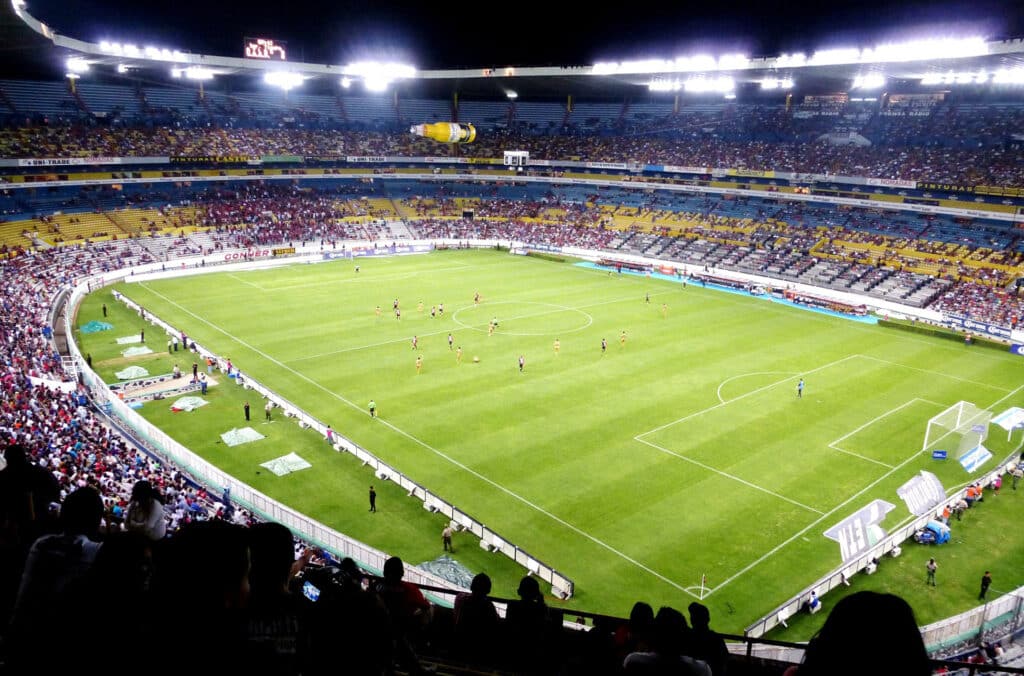
- over or near football stadiums and open-air arenas
Then there are situations for which no permits exist: the weather. And not only that – besides rain and storms, solar winds also pose a danger to drones. Drones navigate by GPS, and this signal can be disrupted by solar winds to such an extent that you can lose control of the aircraft. To check the flight conditions before take-off, there is the app “UAV Forecast” with all the important data a drone pilot needs to know.
One more piece of bad news: even if you can ensure safety ON SITE and have the relevant permissions or permits, there are still a few no-gos that can prevent aerial footage – often on the day itself.
Because, once again: drones may sometimes look like private toys, but they count as aircraft and are regulated as such. Just as flights can be cancelled 30 minutes before departure for weather or other environmental reasons, your aerial footage can also be cancelled and rescheduled at short notice.
Here too: a skilled pilot or an experienced film production company knows this and will warn you in advance that flights may have to be called off.
The most important environmental warning factors for aerial footage:
- strong gusts of wind
- strong solar winds
- lots of Wi-Fi signals nearby
- heavy rain or snow
Different take-off weights and crew sizes
With small hobby drones, the trend is increasingly towards lighter and smaller units, because they are more flexible for private users. No heavy case to lug around – just put the drone in your rucksack and take it on every hike.
It is also clear that this benefit is rarely of interest to film production companies (and to you as the client). They value image quality, and for that you simply need heavy equipment. The drone alone can easily weigh 10 kg. And at maximum load, the Alta X, for example, reaches a total weight of up to 35 kg. No wonder there is a crew on hand with dimensions like these.
Then it’s not just the pilot and camera operator on site, but also people responsible for air safety, set-up, technical matters and focus pulling. Also important: a so-called spotter, who keeps passers-by from getting too close to the film crew or the drone in the air. In most cases a director is also present to approve the footage. Of course, the right equipment and crew size should be assessed individually for each project.
Comparison: private pilots vs. film production companies
The cheap alternative, or professional aerial footage from a film production company? It always comes down to budget. If the budget is very tight anyway, a private pilot can often be the only way to get aerial footage. And most drones owned by private pilots already offer good to very good image quality. In any case, find out beforehand which drone will be used and then decide whether the quality is enough for you. For a simple aerial photo of your company for your social media channel, you don’t need to hire a film production company straight away. For your own website, the question is how high the resolution and quality of the image need to be. A poor image can quickly ruin the overall impression of your site.
For a corporate film and all other kinds of films for your company, however, we recommend a film production company, as the quality requirements of a corporate film are considerably higher.
Conclusion: what is professional aerial footage?
It is important to find out in advance about all the variables, dangers and restrictions of a drone flight. This is where you should have a professional film production company at your side. You often need permits, favourable weather conditions and a whole team to create high-quality photos or videos from the air – but it is worth it. Professional aerial footage can greatly enrich your corporate film or your website.
I hope this article has given you a first overview of professional aerial footage shot with drones. If you would now like to find out about the different prices and cost factors, I recommend our blog article on exactly this topic.